
Amazake
Just like shio-koji and shoyu-koji, amazake is a useful staple to keep on hand in a fermentation-focused kitchen. Its natural sweetness makes it an excellent substitute for sugar in dressings, marinades, sauces, and baking, while also adding depth of flavour and nutritional value. By keeping a batch in the fridge, you will always have a versatile koji-based ingredient ready to incorporate into both sweet and savoury dishes.
Want to learn more about amazake? This recipe guide focuses on how to make rice koji amazake at home, but there is much more to this traditional fermented drink than its preparation alone. In our companion article, we explore the history of amazake, its role in Japanese culture, the science behind its gentle sweetness, and the nutrients that have earned it the nickname “Japan’s drinkable IV.” If you’re curious about what makes amazake so special, it’s well worth a read. Click here to read more …
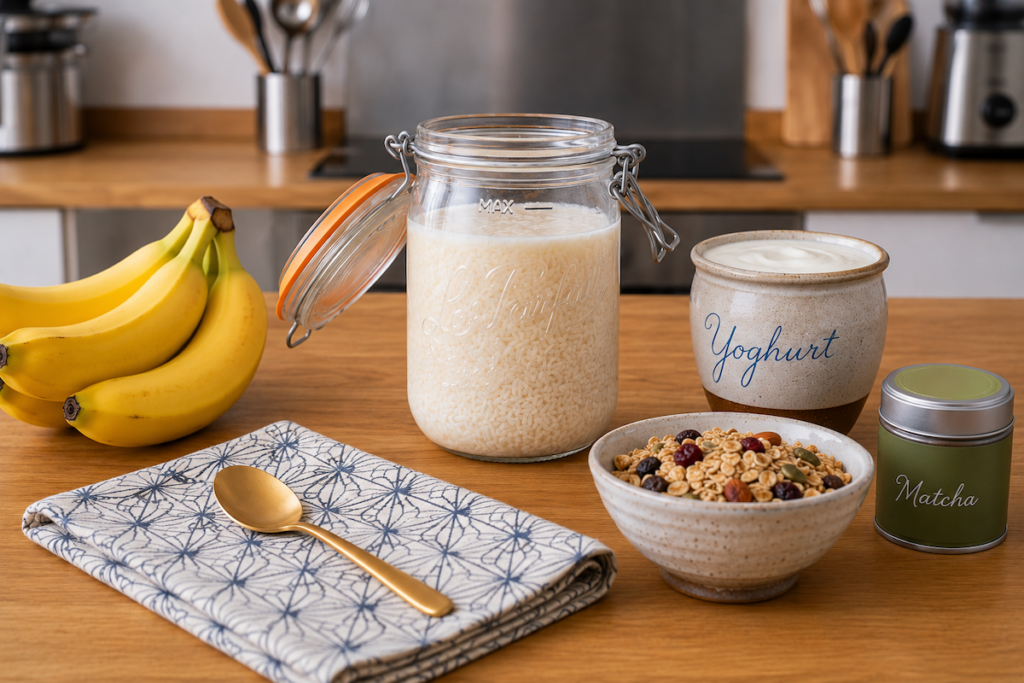
Amazake
Ingredients
- 300 g rice koji
- 400 ml water (approx 55°C)
Instructions
- Boil and Cool the Water: Bring your water to a boil, then remove it from the heat and let it cool until it drops just below 60°C.
- Break Up the Koji: Thoroughly massage the rice koji to break up any clumps, ensuring the grains are completely separated before you begin.
- Combine and Fill the Container: Place the loosened koji grains and the warm water into your yoghurt maker's container and mix thoroughly. Pop it into the machine. If you want to keep a close eye on progress, insert a clean kitchen thermometer directly into the mixture to monitor the heat.
- Incubate and Monitor: Set your yoghurt maker to maintain a steady temperature between 55°C and 60°C. Leave the mixture to incubate for approximately 6 hours, giving it a gentle stir with a clean spoon about once every hour.