
Amazake: Japan’s Traditional Fermented Super Drink
Once a summer staple of the Edo period and now known as Japan’s “drinkable IV,” amazake is a traditional fermented rice drink prized for its gentle sweetness, nutritional value, and centuries of history.
A Summer Energy Drink from the Edo Period
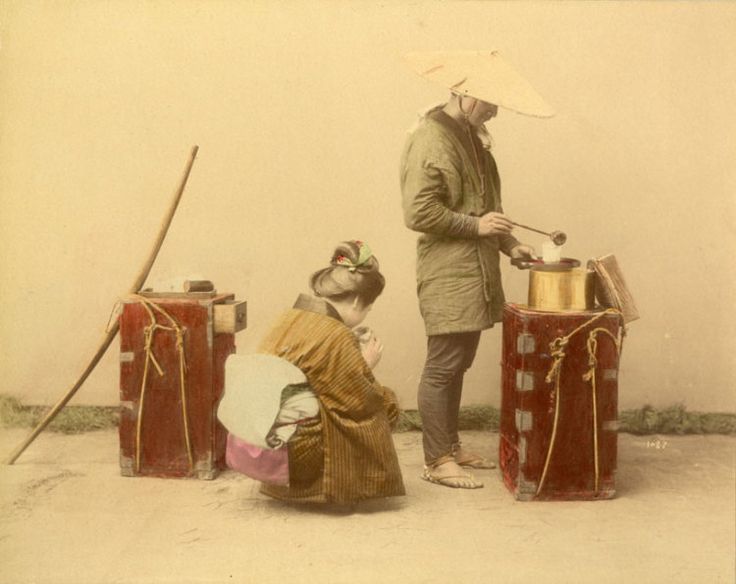
For Japanese people during the Edo Period (1603–1868), amazake was far more than just something sweet to drink. Long before air conditioning existed, it served as a kind of proto-energy drink, helping people cope with Japan’s hot and humid summers.
It is said that during these sweltering months, amazake peddlers could be found throughout towns and cities, selling their wares to passers-by. People drank amazake not only for refreshment but also as a source of nutrition and as a way to recover from summer fatigue.
From Traditional Remedy to Modern Superfood
In modern Japan, amazake has earned the nickname nomu ten-teki (飲む点滴), meaning “drinkable IV.” This comparison comes from the fact that amazake contains many of the nutrients commonly associated with intravenous nutritional drips.
Rice koji amazake contains glucose, oligosaccharides, essential amino acids, B vitamins, and enzymes. The people of the Edo Period would not have understood the science behind these nutrients, but they may well have known from experience that amazake helped restore energy and maintain health.
When I was a child, I only ever drank amazake at New Year celebrations or local festivals. It carried a strong image as an old-fashioned drink, and to be honest, I was never particularly familiar with it. However, with the recent rise of the koji boom, amazake has once again come into the spotlight.
Today, it is valued not only for its nutritional qualities but also for its gentle, naturally sweet flavour derived from rice. It has become popular among younger generations and is increasingly used as a substitute for sugar in both cooking and baking.
Despite its name, it is worth remembering that amazake does not actually contain alcohol. Although 甘酒 literally translates as “sweet sake,” traditional rice koji amazake is completely alcohol-free.
Three Styles of Rice Koji Amazake
There are three basic styles of rice koji amazake:
Hayazukuri (はや作り) – made with equal parts rice koji and water.
Katazukuri (かた作り) – made with equal parts rice koji and cooked rice.
Usuzukuri (うす作り) – made with equal parts rice koji, cooked rice, and water.
My personal favourite is amazake made using only rice koji and water. I find that this style allows the aroma of the rice koji itself and its natural sweetness to shine through more clearly.
Amazake made with cooked rice, on the other hand, has less of the distinctive rice koji character and tends to taste slightly sweeter.
How Rice Koji Amazake is Made
For a more detailed guide to making your own amazake, head over to our Essentials section.
I always use a yoghurt maker when making amazake, maintaining a temperature of between 55°C and 60°C and allowing it to incubate for approximately six hours.
During this time, the enzyme amylase contained within the rice koji breaks down starch into glucose and oligosaccharides. This process, known as saccharification, creates amazake’s characteristic gentle sweetness.
The optimal temperature range for amylase activity is generally considered to be between 50°C and 62°C.
Below 50°C, saccharification becomes less efficient, and there is an increased risk of unwanted microorganisms such as lactic acid bacteria or yeast proliferating. Above 62°C, enzyme activity begins to weaken, and the enzymes themselves may become inactive. Careful temperature control is therefore important.
When using a warming device such as a yoghurt maker, temperature differences can sometimes develop between the top and bottom of the container. Stirring regularly helps maintain a more consistent temperature throughout the amazake.
Aroma, Storage, and Food Safety
Finished rice koji amazake has a thick, porridge-like consistency and a sweet aroma reminiscent of chestnuts.
If you intend to store it, allow it to cool completely before placing it in the refrigerator and consume it within one week.
If you have any concerns regarding hygiene, we recommend briefly boiling the finished amazake before drinking or refrigerating it.
What Does Amazake Contain?
Rice koji amazake is said to contain a wide range of naturally occurring compounds, including:
- Glucose
- Oligosaccharides
- Amino acids
- Peptides
- B vitamins
- Enzymes
- Dietary fibre
- Koji mould components
- Ergothioneine
- Glucosylceramide
When you look at this impressive list, it is hard not to be amazed by the wisdom of our ancestors.
A Traditional Fermented Super Drink
Whether you are seeking to support your beauty and health, looking for a convenient source of nutrition, or simply wanting to explore one of Japan’s traditional fermented foods, amazake is well worth trying.
With its gentle sweetness, rich nutritional profile, and centuries of history, it remains one of Japan’s most remarkable fermented drinks.
As rice koji amazake contains sugars in a readily absorbable form, avoid drinking large quantities at once, particularly on an empty stomach. A daily serving of around 100–200ml is generally sufficient, but adjust according to your own needs and circumstances. If you have any pre-existing medical conditions, including allergies or diabetes, please consume amazake at your own discretion.
Sake Lees Amazake
In addition to rice koji amazake, there is another popular style made from sake kasu (酒粕), or sake lees.
Sake lees are the solid residue left behind after alcohol has been pressed from the moromi (fermenting mash) during the sake brewing process.
Unlike rice koji amazake, sake lees amazake is typically made by dissolving the lees in hot water and adding sugar. Because sake lees contain residual alcohol, this style of amazake also contains a small amount of alcohol.
A little fresh ginger is often added to enhance the aroma and provide a warming effect. On a cold winter’s day, a cup of sake lees amazake can be particularly comforting.
Sources & Further Reading
Books & Publications
Murakami, H. (Ed.). The Science of Koji (Kōjigaku). The Science of Koji
Academic Papers
Kurahashi, A. (2019). Composition, Functionality, and Safety of Koji Amazake. Seibutsu-kogaku Kaishi (Journal of the Society for Biotechnology, Japan), 97(4), 190–194.
https://www.maff.go.jp/j/keikaku/syokubunka/traditional-foods/files/user/pdf/japanese_hakko_part3.pdf
Historical & Online Resources
Ministry of Agriculture, Forestry and Fisheries of Japan. Amazake: A Fermented Beverage Referred to as “Drinkable IV Drip.” In Learning from the Wisdom of Fermented Foods, Chapter 3: Learning About Japan’s Representative Fermented Foods, p.18.
https://www.sbj.or.jp/wp-content/uploads/file/sbj/9704/9704_tokushu_5.pdf