
Sake Kasu: Japan’s Overlooked Fermented Treasure
Often overlooked in favour of sake itself, sake kasu is a nutrient-rich fermented food packed with flavour, history, and untapped potential. Discover why this humble by-product may be one of Japan’s most fascinating culinary treasures.
Sake kasu [酒粕], or sake lees, is the by-product left behind after sake has been pressed from the fermenting mash or moromi. Once pressing is complete, brewers are left with a tank full of fresh sake and a substantial quantity of kasu, which is packed full of nutrients as well as enzymes and other compounds derived from the koji used in the brewing process.
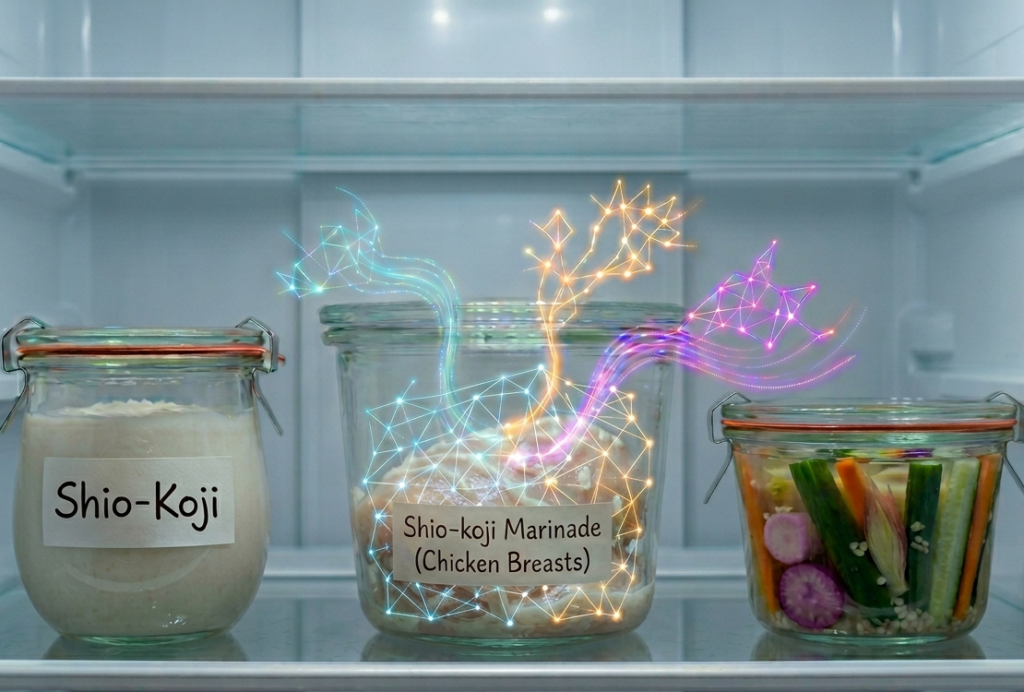
Meet the Enzymes: Koji’s Secret Workforce
We talk a LOT about the power of koji’s enzymes and how they can transform your cooking. But what are they? Find out in this simple guide →
Many breweries either sell their kasu directly to consumers or in bulk to food producers such as tsukemono pickle makers. Some even supply to livestock producers who feed it to their pigs or cattle. Forget corn-fed chicken; it’s all about kasu-fed pork!
For centuries, this nutrient-rich by-product has been treasured by sake breweries throughout Japan. Yet despite its long history, many people outside Japan remain unfamiliar with it.
More Than Just a By-Product
Until relatively recently, the most common uses for sake kasu were:
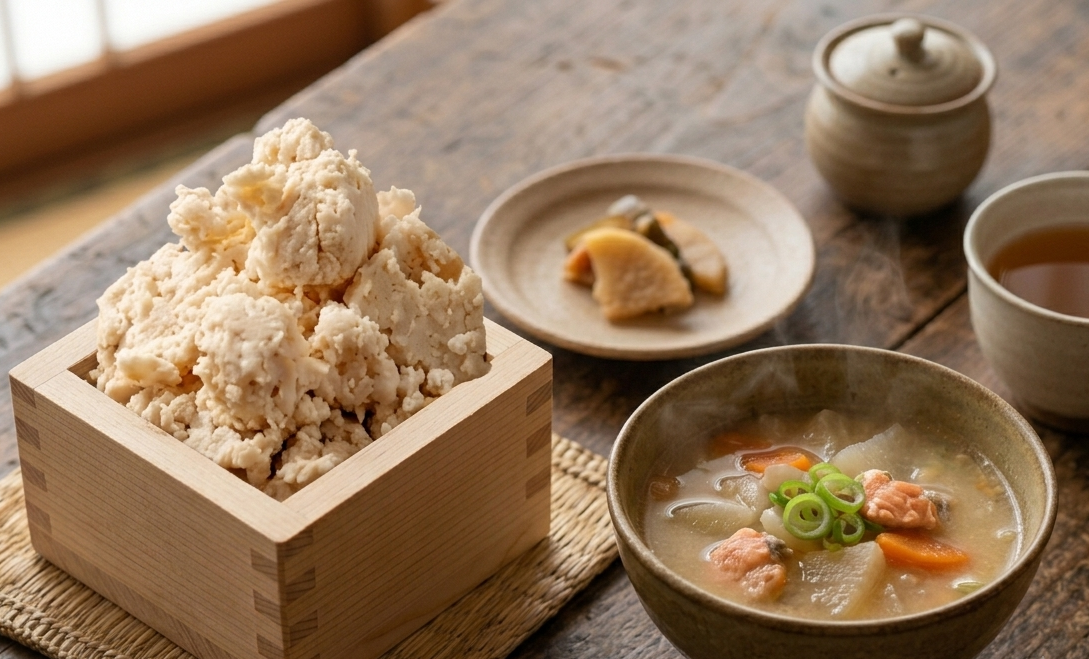
- Kasuzuke [粕漬け] – vegetables, fish, or meat pickled in sake kasu
- Kasujiru [粕汁] – a hearty soup similar to miso soup
- Sake kasu amazake [酒粕甘酒] – a sweet, warming drink made from sake lees
However, the recent boom in interest surrounding koji and fermented foods has brought renewed attention to sake kasu. Previously overlooked nutritional components, together with the potential beauty and health benefits associated with them, have been featured extensively in television programmes, magazines, and online media.
As a result, innovative recipes using sake kasu have emerged one after another, attracting health-conscious consumers and younger generations alike.
My Favourite Ways to Use Sake Kasu
When my husband was brewing sake in the UK, he would frequently bring sake kasu home for me.
I used it to make clam chowder, sake kasu chocolate tarts, and even vegan cheese. I would also add it to miso soup for extra richness and depth of flavour.
Sake kasu is a remarkable fermented food. Its rich umami, gentle sweetness, and creamy texture can evoke flavours reminiscent of yoghurt, cream cheese, or even aged cheese. It pairs particularly well with miso, creating layers of savoury complexity that are difficult to achieve by other means.
I find it surprising that sake kasu is still relatively unknown outside Japan. However, with new sake breweries appearing around the world every year, I believe it is only a matter of time before sake kasu begins to gain wider recognition internationally.
The Hidden Legacy of Koji
One aspect of sake kasu that is often overlooked is its connection to koji.
Sake production begins with rice koji, created by cultivating Aspergillus oryzae on steamed rice. During this process, the koji mould produces large quantities of enzymes, particularly amylases and proteases.
These enzymes break down rice starch into sugars and rice proteins into amino acids, making alcoholic fermentation possible.
Even after the sake has been pressed, many of the compounds created through the action of these enzymes remain in the sake kasu. In this sense, sake kasu can be viewed as a concentrated record of the entire brewing process.
When used in cooking, these koji-derived compounds contribute sweetness, umami, aroma, and depth of flavour. In some cases, residual enzymes may continue to act on ingredients when sake kasu is used in marinades, pickles, or other uncooked preparations.
However, enzymes are sensitive to heat and gradually become inactive at higher temperatures. For this reason, sake kasu can behave quite differently depending on whether it is used raw, gently warmed, or thoroughly cooked.
Flavour and Character
The flavour of sake kasu varies greatly depending on the type of sake from which it was produced and the methods used during brewing and pressing.
Some varieties retain the rich umami, depth, and slightly bittersweet character of junmai sake. Others reflect the elegant floral aromas and refined sweetness associated with premium daiginjo sake.
Like wine, cheese, or miso, each brewery’s sake kasu possesses its own unique personality.
Forms of Sake Kasu
Sake kasu is commonly sold in several forms:
- Ita-kasu – compressed slabs of sake kasu
- Bara-kasu – loose flakes or fragments resembling crumbled ita-kasu
- Neri-kasu – a smooth, paste-like form of sake kasu
Main Components of Sake Kasu
Sake kasu is thought to contain a wide variety of compounds created throughout the brewing process, including:
- Koji-derived enzymes, including amylases and proteases
- Fermentation microorganisms such as yeast, koji mould, and lactic acid bacteria
- Amino acids
- Peptides
- Organic acids, including lactic acid and succinic acid
- Vitamins and minerals
- Dietary fibre
- Resistant protein
Potential Health Benefits
Research into sake kasu is still developing, but studies have suggested a number of possible benefits, including:
- Support for liver health
- Assistance with maintaining healthy cholesterol levels
- Support for healthy blood pressure regulation
Although further research is needed, interest in sake kasu continues to grow as scientists learn more about the compounds it contains.
Sake Kasu and Beauty
In Japan, sake kasu has long been associated with beauty as well as health.
Today, sake kasu is used in a wide variety of cosmetic products, including:
- Facial cleansers
- Face masks
- Face creams
- Bath additives
- Soaps
This connection between fermentation, beauty, and well-being remains an important part of Japanese food culture.
A Traditional Ingredient with Untapped Potential
Despite its long history, sake kasu remains surprisingly under-researched, and much of its potential is still untapped. As interest in Japanese fermentation spreads around the world, future research may reveal new applications and deepen our understanding of this remarkable ingredient.
Our exploration of koji has already taken us down many unexpected paths, and sake kasu is one of the most fascinating. We look forward to continuing that journey and sharing what we learn along the way.
Sources & Further Reading
Books & Publications
Gekkeikan Co., Ltd. Gekkeikan Shain no Sake Kasu Recipe [Gekkeikan Employees’ Sake Kasu Recipes]. Tokyo: Media Factory.
Academic Papers
Fujii, T. (2022). “Potential Abilities of Fermented Food ‘Pressed Sake Cake’ for Anti-Aging and Brain Function Improvement.” Journal of the Brewing Society of Japan, 117(2), 76–82.
https://agriknowledge.affrc.go.jp/RN/2010941118.pdf
Watanabe, T. (2012). “Ingredients in ‘Sake Cake’ That Contribute to Health and Beauty.” Journal of the Brewing Society of Japan, 107(5), 282–291.
https://agriknowledge.affrc.go.jp/RN/2010832420.pdf