
Shoyu-koji (Soy Sauce Koji)
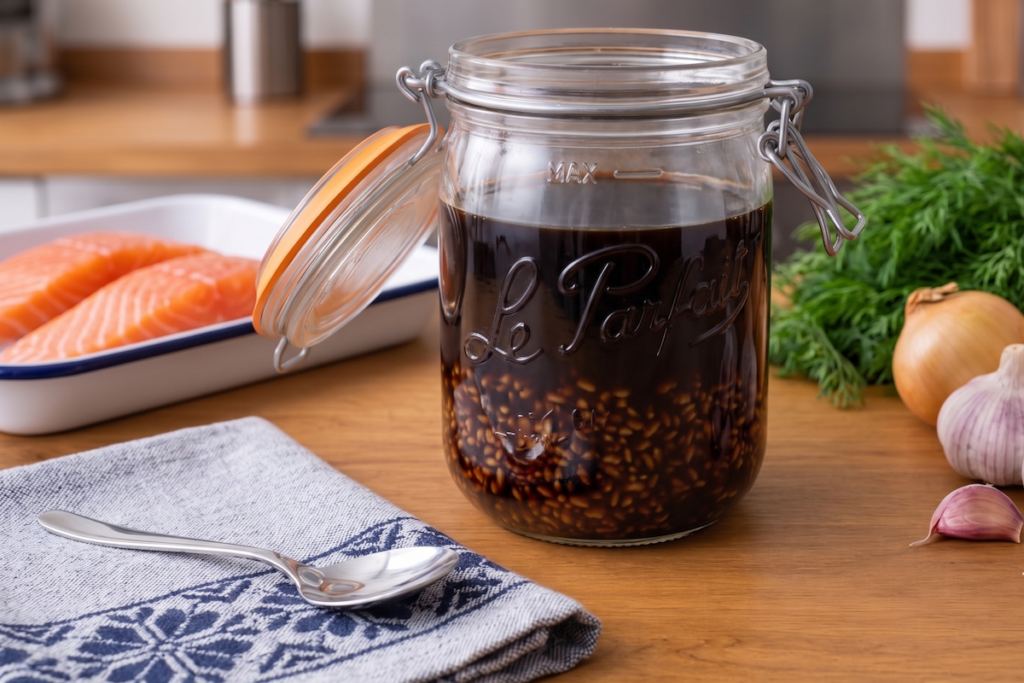
Once you’ve discovered the delights of shio-koji, moving on to shoyu-koji (soy sauce koji) is the logical—and addictive—next step. As with shio-koji, there is no single, definitive recipe; you’ll find dozens of different ratios across the web. The proportions I use here have been arrived at through years of trial and error.
My shoyu-koji has a salt concentration of approximately 11%, which I find ideal in terms of flavour, safe fermentation, and convenient portion sizes. To achieve this concentration, I recommend using a good-quality dark soy sauce. Checking the nutritional label, it should contain approximately 2.5g of salt per 15ml tablespoon.
For convenience, I use a standard 500ml bottle of soy sauce. Although the bottle contains 500ml by volume, soy sauce is heavier than water, so this equates to approximately 590g in weight. This bottle therefore contains a total of approximately 83.3g of salt. When combined with 200g of rice koji, the total batch weight becomes approximately 790g.
A simple calculation shows how this ideal salt concentration is achieved:
The Culinary Maths
To calculate the final salt concentration, we divide the total weight of the salt by the total weight of the entire batch:

The Shoyu-koji Advantage
Soy sauce is already an essential condiment in its own right, but when combined with rice koji, it is elevated to an entirely new level. It also lowers the salt concentration and increases the umami, sweetness, and richness.
This process also incorporates enzymes produced by the koji. These enzymes help break down proteins in ingredients such as meat and fish, naturally tenderising them whilst bringing out a deeper and richer savoury flavour.
Shoyu-koji
Ingredients
- 200 g rice koji
- 500 ml dark soy sauce
Instructions
- Break Up the Koji: Place your rice koji into a clean bowl or directly into your storage container. Using your hands, gently rub the koji together to break up any large clumps. You want every single grain to be free and separated so it can absorb the water evenly.
- Combine and Mix: Add the soy sauce to a sterilised container with the separated koji. Stir everything thoroughly using a clean spoon or silicone spatula. Ensure the koji grains are completely submerged in the soy sauce.