
7 Magnificent Things You Need to Know About Koji
What is koji? This beginner-friendly Koji 101 guide explores essential facts about Japan’s most important fermentation culture, from the science of enzymes to the delicious foods and seasonings it helps create.
The microorganisms responsible for koji may be microscopic, but their influence on Japanese food is enormous. For more than a thousand years, this remarkable mould has helped create many of Japan’s most iconic foods and drinks, from miso and soy sauce to sake and amazake.
Yet despite its enormous influence on Japanese food, many people outside Japan remain unfamiliar with it.
Consider this your Koji 101: seven magnificent things every food lover should know about the mould at the heart of Japanese fermentation.
1. Koji Is the Foundation of Japanese Fermentation
The power of koji plays a crucial role in an impressive line-up of Japan’s most iconic fermented foods and drinks:
Miso: A traditional seasoning made by fermenting ingredients such as soybeans, rice, or barley with koji, creating layers of umami and aroma that deepen over time.
Soy Sauce: Japanese soy sauce, or shoyu, is produced through the action of koji on soybeans and wheat, creating the rich umami, aroma, and complexity that make it one of the world’s great condiments.
Sake: Our beloved Nihonshu! Koji enzymes convert starch into glucose, providing fuel for the yeast whilst simultaneously breaking down the rice and helping create the flavours, aromas, and complexity.
Mirin: A sweet seasoning made with koji that adds balance, depth, and a beautiful gloss to sauces, glazes, and simmered dishes.
Rice Vinegar: A bright, balanced vinegar whose journey begins with koji, bringing gentle acidity and subtle sweetness to everything from sushi rice to salad dressings.
Shio-koji: A simple combination of rice koji, salt, and water that transforms meat, fish, and vegetables with umami, sweetness, and tenderness.
Shoyu-koji: A marriage of rice koji and soy sauce that delivers deep umami, savoury complexity, and extraordinary versatility in the kitchen.
Amazake: One of the purest expressions of koji’s magic, created when enzymes transform rice starch into natural sugars to produce a creamy, nourishing, naturally sweet drink.
With the incredible popularity of Japanese food, it would be amazing to find people who had never encountered at least one of these. Every bowl of miso soup, drizzle of soy sauce, or sip of sake owes something to koji. And without it, it’s impossible to imagine what the globally adored Japanese cuisine would look like.
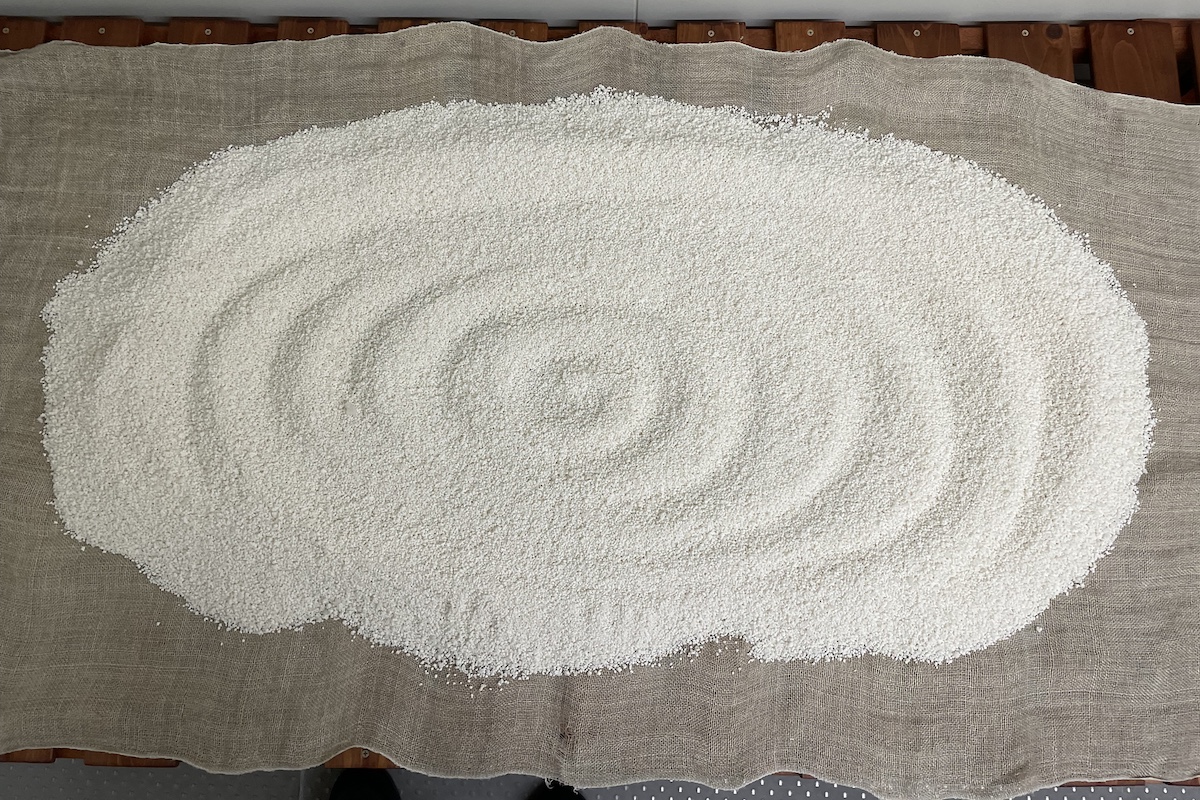
2. Koji Is Made Using a Beneficial Mould
At first, the idea of eating mould may sound a little alarming. After all, if something is mouldy, we usually throw it away.
However, the mould that appears on rice during the koji-making process is a carefully cultivated microorganism known as Aspergillus oryzae. It has been used safely in Japanese food production for centuries and is held in such high regard that, in 2006, it was officially designated Japan’s “national mould.”
Koji mould is known as koji kin [菌] in Japanese and there are three principal types:
Yellow koji kin (Aspergillus oryzae) – yellow-green in appearance and used to produce rice koji for sake, miso, amazake, shio-koji, and shoyu-koji.
White koji kin (Aspergillus luchuensis mut. kawachii) – beige in appearance, commonly used in shochu production, and prized for its ability to produce citric acid.
Black koji kin (Aspergillus luchuensis) – brownish in appearance and traditionally used in the production of Okinawan awamori and some styles of shochu.
If mould still sounds strange, it’s worth remembering that some of the world’s most celebrated foods also rely on beneficial moulds, including Roquefort, Gorgonzola, and Stilton cheeses.
3. Koji Comes in Many Forms
Koji mould can be cultivated on a variety of base materials, known as substrates. The substrate used determines the type of koji that is produced.
For example:
Rice → Rice koji
Barley → Barley koji
Soybeans → Soybean koji
Each has its own character, flavour profile, and traditional uses.
Rice koji is widely used to make sake, amazake, shio-koji, and many styles of miso. Barley koji is common in barley miso and shochu production, while soybean koji plays an important role in certain soy sauces and misos.
Today, producers are experimenting with all kinds of new substrates, from spent brewing grains to bread that might otherwise go to waste. As interest in fermentation grows, so too does the creativity of the people working with koji.
Here at Living the Koji Life, our primary focus is rice koji because of its versatility and importance in Japanese fermentation. That said, we’re endlessly fascinated by the many forms koji can take and the new possibilities they continue to reveal.
4. Koji Contains Powerful Enzymes
When we talk of the power of koji, what we really mean is the power of its enzymes.
As Aspergillus oryzae grows on rice or other substrates, it produces a remarkable collection of enzymes, which break large molecules down into smaller ones and unlock flavours that would otherwise remain hidden.
The two most important groups are:
Amylases – break starch down into sugars, creating sweetness and providing the fuel needed for fermentation.
Proteases – break proteins down into peptides and amino acids, generating savoury umami flavour and increasing digestibility.
Together, these enzymes transform ordinary ingredients, making them indispensable not only in brewing and food production, but also in home and professional kitchens. They can tenderise meat, enhance umami, bring out natural sweetness, and help create the deep, layered flavours associated with foods such as miso, soy sauce, sake, shio-koji, and shoyu-koji.
5. Koji Can Be Used to Make Mighty Seasonings
You don’t need to work in a sake brewery to benefit from the power of koji. Nor do you need to cook Japanese food.
One of the most exciting things about koji is its versatility. Whether you’re making a Sunday roast, a pasta sauce, a salad dressing, or a chocolate dessert, koji can help improve flavour, texture, and complexity.
Our goal at Living the Koji Life is simple: to see koji-based ingredients become as familiar and indispensable in everyday kitchens as salt, pepper, and sugar.
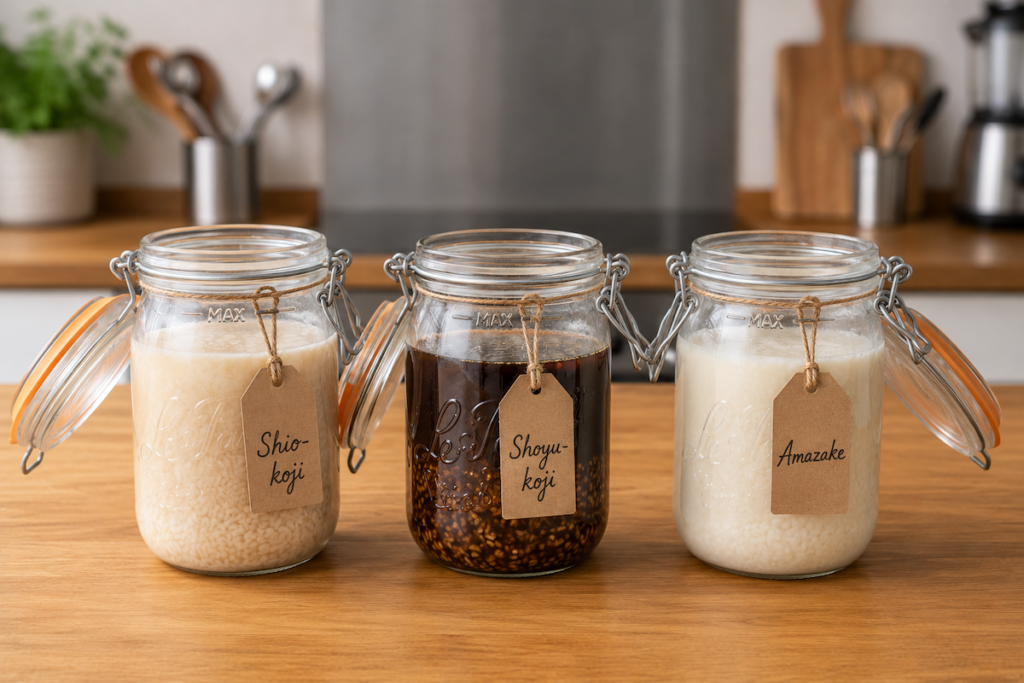
Shio-koji combines rice koji, salt, and water to create an all-purpose seasoning that enhances umami, tenderises proteins, and brings out natural sweetness.
Shoyu-koji combines rice koji and soy sauce to produce a rich, intensely savoury seasoning packed with umami and depth of flavour.
Amazake is a naturally sweet drink made when koji enzymes break rice starch down into sugars. It can also be used in cooking and baking as a natural sweetener.
What all three have in common is that they harness the power of koji enzymes in a form that’s easy to use at home. Whether you’re marinating chicken, seasoning vegetables, or sweetening a dessert, they make it remarkably simple to bring the benefits of koji into your everyday cooking.
For many people, these ingredients are the gateway to a deeper fascination with fermentation—and once you start cooking with them, it’s easy to see why.
Building your koji larder ..
Any one of these will be a game-changer in the kitchen. Having all three will blow your mind!
Get started with Koji Essentials →
6. Koji Makes Food Taste Better
By now, we’ve talked about mould, enzymes, and seasonings. But most cooks care about one thing above all else:
Does koji make food taste better?
The answer is a resounding yes.
One of the reasons chefs and home cooks alike are drawn to koji is that it has an extraordinary ability to improve both flavour and texture.
Chicken marinated in shio-koji becomes noticeably more tender and juicy. Fish develops greater depth and savoury complexity. Vegetables often taste sweeter and more rounded. Soups, sauces, and dressings gain layers of flavour that can be difficult to achieve by other means.
The reason lies in the work of the enzymes. As they break starches and proteins down into sugars, peptides, and amino acids, they create many of the compounds responsible for sweetness, richness, and umami.
Perhaps the most remarkable thing about koji is that it rarely overwhelms an ingredient. Instead, it tends to express more of what was already there.
In short, koji’s greatest gift isn’t adding flavour—it’s revealing more of what’s already there.
7. We’re Only Beginning to Understand Koji’s Potential
For an ingredient with more than a thousand years of history, koji feels remarkably modern.
Chefs, fermenters, and home cooks around the world are finding new ways to use koji in everything from charcuterie and baking to plant-based cooking. Not every experiment is a success, of course. Some of my own have ended in spectacular failure, including the time a spoonful of shio-koji reduced a bowl of mashed potatoes to something closer to vichyssoise. But that spirit of experimentation is part of what makes working with koji so rewarding.
Researchers continue to study the enzymes, amino acids, vitamins, and other compounds produced during fermentation. Interest is also growing in areas such as beauty, wellness, and the ways fermented foods may support health and wellbeing.
Sake kasu, the nutrient-rich by-product of sake brewing, has attracted particular attention in recent years for its potential applications in both food and cosmetics. Kojic acid, a compound associated with koji fermentation, is increasingly used in skincare products and has been studied for its potential skin-brightening and antioxidant properties.
When I think about the incredible skin I’ve seen on some of the eighty-year-old sake brewers I’ve met, it’s tempting to wonder whether a lifetime spent working with koji might have something to do with it.
The more we learn about koji, the more possibilities seem to emerge. Our own journey with koji has already taken us down many unexpected paths, and we have a feeling we’re only just getting started.